Third-party risk management (TPRM) is the process of identifying, assessing, and continuously monitoring the cybersecurity risks introduced by vendors, suppliers, and partners. An effective TPRM program follows four steps: tier your vendors by risk level, assess through questionnaires or automated tools, aggregate and analyze the risk data, and generate a prioritized action plan. Organizations that implement a structured TPRM program reduce their exposure to supply chain breaches and demonstrate compliance with frameworks, including NIST SP 800-161r1 and NERC CIP-013.
Every company, big and small, works with third parties to keep their business running. Whether it’s a payroll provider to ensure your employees are paid, a groundskeeper to ensure your offices keep their curb appeal, or a manufacturer of a component of your product, you must ensure you not only understand the risks associated with doing business with these third parties but, more importantly, take action to manage the risk they pose to your organization.
To understand and take action to manage these risks, here are some general third-party risk management best practices.
- Identify and rank your third parties in a systematic way
- Assess your third parties through various channels, which may include attested questionnaires, on-site assessments, or automated tools
- Aggregate and analyze the risk data coming back from the various data sources
- Generate an action plan that prioritizes treating the risks identified that are most critical to your business
- Take action to mitigate, remediate, or accept the risks
- Monitor your third parties for changes in their risk profiles
How do you identify and rank third-party vendors by risk?
Identify and rank your third parties in a systematic way by evaluating the criticality of each third party based on its role in your operations, sensitivity and amount of data it will handle or have access to, and its impact on your business continuity. You can rank third parties through preliminary internal assessments from the business stakeholders, through automated tools that evaluate and calculate risk scores, or through a combination of the two.
From these data points, you will need to create a standardized risk score that represents your organization’s risk appetite to tier out your third parties. Those with a higher risk score would need to be assessed more frequently and in greater detail. Now that you have ranked your third parties, we can begin to assess those higher-risk third parties.
How should you assess third-party vendors?
Asses your third parties through various channels which may include attested questionnaires, on-site assessments, or automated tools. It is essential to compel your third parties to participate in your assessment process, and there are a few different points of leverage you can use. These include contract terms where the third party agreed to participate in an assessment (right-to-audit), holding up a new contract until they have completed an assessment, or not renewing your contract until an assessment is completed.
If you are unable to get the third party to participate, or based on the risk, you may opt to leverage a data-driven assessment through an automated tool. However you decide to assess, you need to be sure the results are standardized so you can compare “apples to apples”. Now that you’ve collected assessment data, it’s time to aggregate and analyze it.
How do you aggregate and analyze vendor risk data?
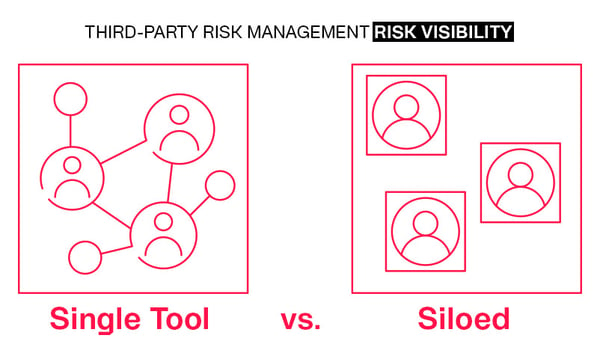
Aggregate and analyze the risk data coming back from the various data sources through your risk metrics that are most relevant to your risk management goals. These may include compliance rates, incident frequency, and control effectiveness. Aggregating the data into a single tool will allow you to “see” risk across your organization vs keeping it siloed.
Many companies employ statistical and machine learning tools to identify patterns, trends, and anomalies in data so they can determine which risks are most critical to action.
Now that you’ve aggregated and analyzed all the data, you will need to create detailed reports that highlight key findings, risks, and recommended actions. Use of visualizations like charts and graphs to make the data more accessible.
How do you turn third-party risk data into an action plan?
Generate an action plan that prioritizes treating the risks identified as most critical to your business so you know the jobs to prioritize. This plan will act as your blueprint to treat your risk. Your plan should offer specific, actionable recommendations for mitigating identified risks, such as implementing additional controls (mitigation), conducting further assessments, and collaborating with your third party to “fix” the deficiency (remediation). Ultimately, you may have to decide to terminate the relationship by changing providers.
It is important to take action to mitigate, remediate, or accept the identified risks and track your progress over time. You will need to engage stakeholders from various parts of the business, including senior management, procurement, and legal teams. Collaboration with third parties to address the identified risks will be essential to improving their (and your) security posture. Implementing action can be the most time-consuming part of the risk management process, but this is the most important part. It’s not about what you find, it’s about what you fix.
Ongoing Third-Party Risk Monitoring: Detecting and Responding to Emerging Threats
Continue to monitor your third parties for changes in their risk profiles over time. This will allow you to respond quickly if an incident involves that third party. Third-party incidents may include security breaches, mergers and acquisitions, or changes in foreign ownership, control, and influence. Many companies are leveraging monitoring to “check” on their third parties in between full assessments, which in some cases can be years.
Learn more about how revolutionary AI tools can help monitor risk efficiently and effectively.
Enhancing Your Risk Management Program Through Continuous Improvement and Collaboration
Now that you have established a full process to manage your risk, you’ll want to be sure to establish a feedback loop with your internal stakeholders and third parties to continuously improve your process and program.
Fortress has best-in-class capabilities to effectively and efficiently manage risk across supply chains. To find out more about our comprehensive approach and how we can collaborate with your team to manage your risks within your supply chain, you can schedule a demo here.
Key Definitions
What is third-party risk management (TPRM)?
Third-party risk management is the structured process of identifying, evaluating, and continuously monitoring the risks that external vendors, suppliers, and partners introduce to your organization. TPRM programs cover cybersecurity risk, operational risk, compliance risk, and supply chain risk.
What is vendor tiering?
Vendor tiering is the practice of categorizing third parties by their level of risk to your organization — based on factors such as data access, operational dependency, and geographic or regulatory exposure. Higher-tier vendors require more frequent and rigorous assessments.
What is risk appetite in TPRM?
Risk appetite is the level of risk an organization is willing to accept from third-party relationships. It determines how vendors are scored, what thresholds trigger remediation, and when a relationship requires additional controls or contract modifications.
What is a right-to-audit clause?
A right-to-audit clause is a contractual provision that gives an organization the legal right to assess or audit a vendor's security posture. It is a foundational tool for enforcing TPRM requirements, particularly for high-tier vendors with access to sensitive systems or data.